


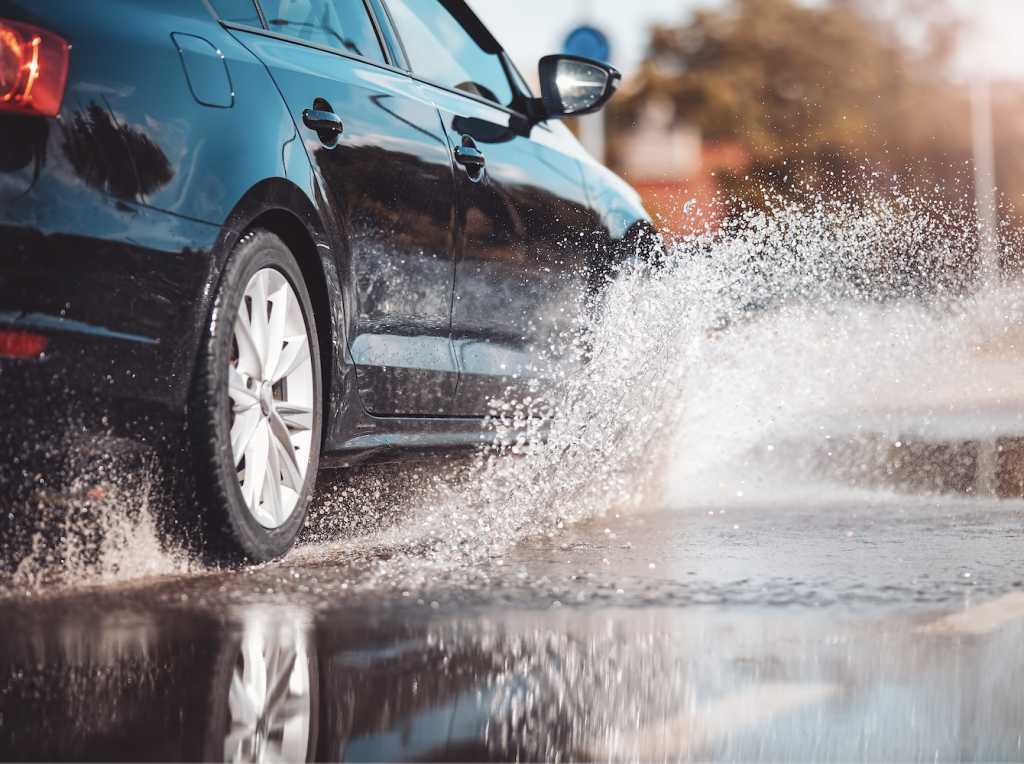
Driving in heavy rain:
- Turn your headlights on – the Highway Code says you must use them when visibility is seriously reduced
- Use fog lights if you like, but switch them off when visibility improves.
- Leave twice as much space between you and the car in front – it takes longer to stop in the wet.
- If your steering feels light due to hydroplaning, ease off the accelerator and slow down gradually.
- If you break down don't prop the bonnet open while you wait. Rain-soaked electrics can make it harder to start the engine.
Driving during floods and standing water
- Try to avoid standing water if you can.
- Don't drive into flood water that’s moving or more than 4 inches deep. Let approaching cars pass first if you are unsure of the depth
- Drive slowly and steadily so you don’t make a bow wave.
- Test your brakes as soon as you can afterward. Water can have a damaging effect on brakes, make sure they are working properly before you continue to drive
- Fast-moving water is very powerful: if strong enough your car could be swept away. Find an alternate route if the water is moving too fast to pass-through
Watch out for:
- Look out for slip and trip hazards like curbs under the water.
- Manhole covers can get lifted and moved.
- Water levels can change quickly